


 India
India Africa
 Americas
 Europe
 Middle East
Solar Shell Architecture: How Smart Solar Facades Are Creating the Next Generation of Solar-Powered Building Envelopes
- Home
- /
- Blog
- /
- Solar Shell Architecture
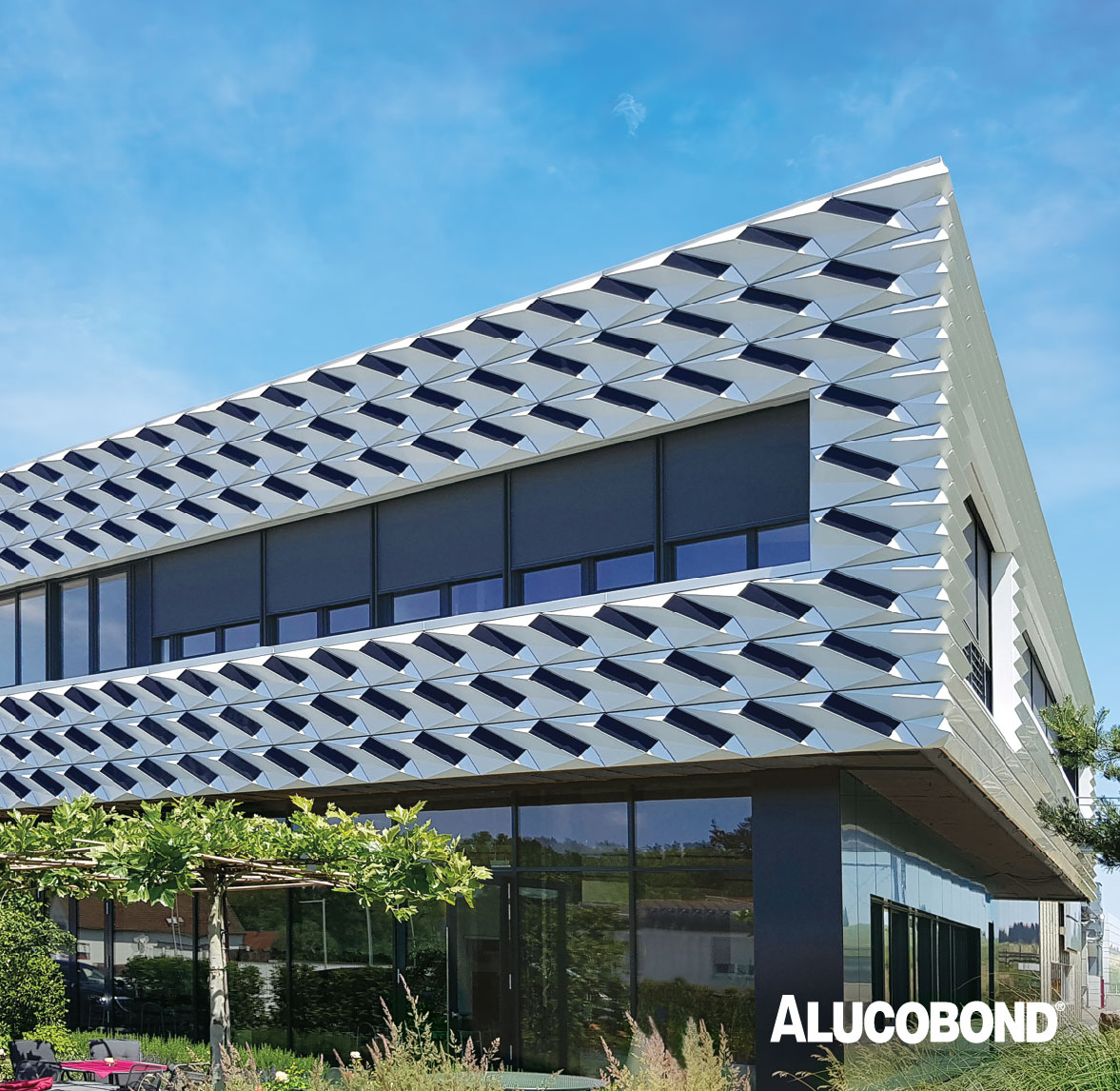
Project name: Solar.shell | Product: ALUCOBOND® PLUS | Building Owner: Aluform Alucobondverarbeitungs-GmbH | Architect: ai:L Architektur-Institut Leipzig an der HTWK Leipzig | Stefan Huth, M.A., Architekt Prof. Dipl.-Ing. Frank Hülsmeier, Architekt | Dipl.-Ing. (FH) Adrian Heller, Architekt | Fabricator/Installer: Aluform Alucobondverarbeitungs-GmbH | Colour: Pure White 10 | Completed year: 2022
The future of architecture is no longer defined by buildings that only consume energy. It is shaped by structures that generate energy and intelligently improve performance. This shift has given rise to Solar Shell Architecture, an advanced technique that transforms the building envelope into a power-producing, climate-responsive and visually striking system.
At the centre of this evolution is the Solar shell, a smart outer skin that integrates photovoltaic technology with high-performance facade materials to create a truly Solar-powered building envelope. When paired with the right Solar facade cladding system, the building envelope becomes one of the most critical functional layers of the structure.
What Is a Solar Shell
A Solar shell is the external layer of a building designed to harvest solar energy while continuing to perform all traditional facade functions—protection, insulation, weather resistance and aesthetics. Unlike conventional rooftop installations, Solar shells utilise vertical facades, shading devices and cladding surfaces, significantly increasing the area available for energy generation.
Why Solar Shell Architecture Is Redefining Building Design
Traditional facades act as passive skins. In contrast, Solar Shell Architecture turns the facade into a working system, converting sunlight into electricity while controlling heat gain and daylight.
As a result, solar-powered building envelopes deliver:
- Lower operational energy consumption
- Reduced carbon emissions
- Improved indoor thermal comfort
- Stronger sustainability certifications
- Higher long-term asset value
The Importance of a Solar Facade Cladding System
A high-performance Solar facade cladding system forms the structural and functional backbone of the Solar shell. It supports photovoltaic modules while preserving essential weatherproofing, thermal control and facade fire-safety performance.
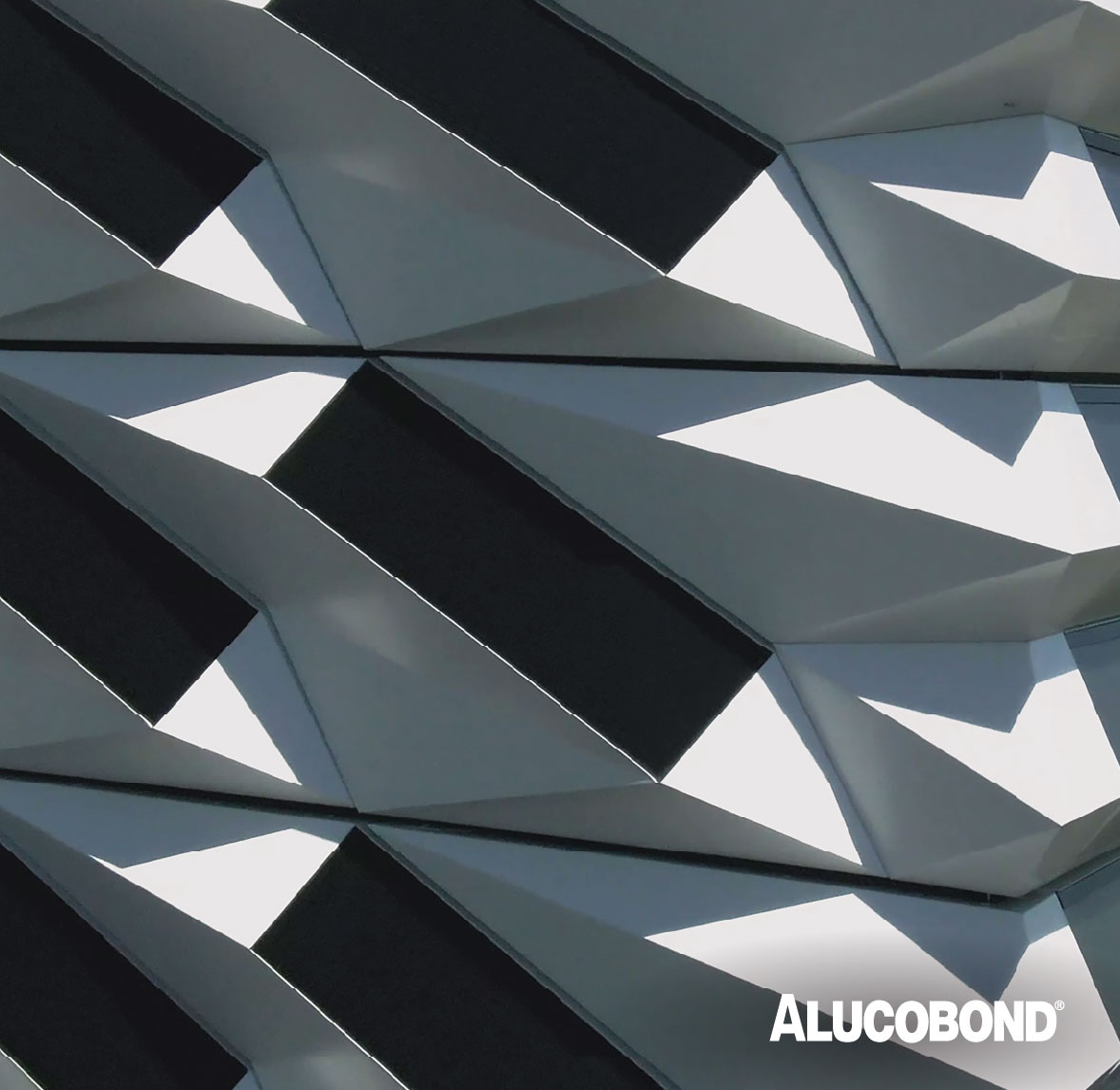
Project name: Solar.shell | Product: ALUCOBOND® PLUS | Building Owner: Aluform Alucobondverarbeitungs-GmbH | Architect: ai:L Architektur-Institut Leipzig | Fabricator/Installer: Aluform Alucobondverarbeitungs-GmbH | Colour: Pure White 10 | Completed year: 2022
Such systems must be engineered to withstand:
- Intense solar radiation
- Elevated surface temperatures
- Wind loads and building movement
- Prolonged UV exposure
- Integrated electrical and service requirements
Without a suitably designed cladding system, even the most advanced solar technologies cannot deliver reliable, long-term performance at the building envelope.
Durability Requirements for Solar-Integrated Facades
Facades designed for solar integration operate under prolonged exposure to sunlight, elevated surface temperatures and varying climatic conditions. This demands materials that retain their performance and appearance over long periods.
In solar-integrated buildings, facade durability directly influences the reliability of the solar-powered building envelope. Stable surface performance helps maintain architectural quality while supporting the long-term efficiency of solar systems integrated into the building exterior.
Fire Performance as a Core Design Criterion in Solar Shell Architecture
Solar shell architecture introduces additional thermal and electrical considerations at the facade level, making fire performance a fundamental design requirement.
ALUCOBOND® A2 features a mineral-filled, non-combustible core and is classified A2-s1, d0 as per EN 13501-1. It is widely specified in facade systems designed to meet stringent fire performance requirements, including those applied to large-scale facade assessments.
This makes ALUCOBOND® A2 well suited for high-rise and safety-critical solar-integrated facades, where strict fire regulations must be met without compromising architectural intent.
Why ALUCOBOND® Is Ideal for Solar Shells
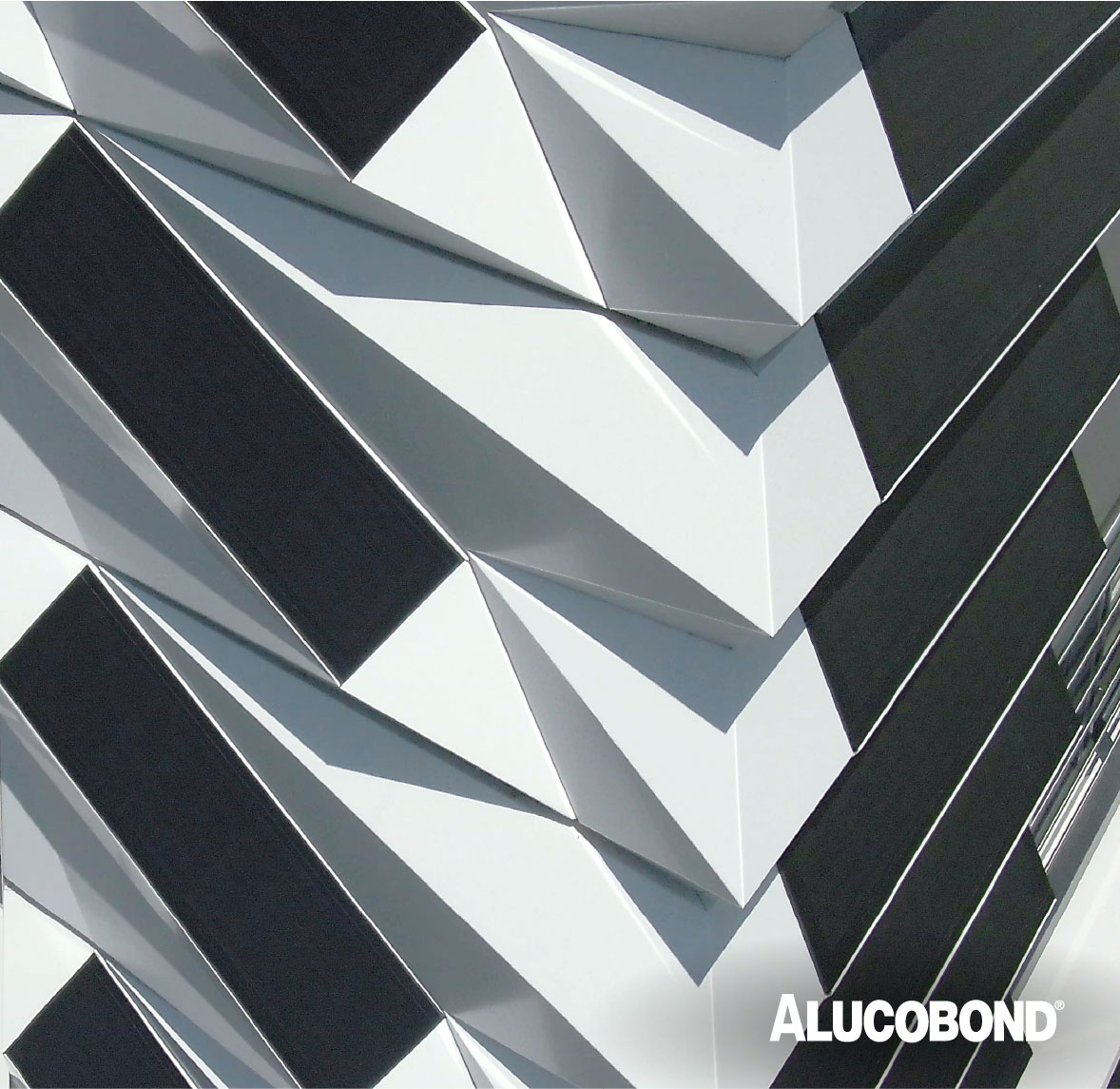
Project name: Solar.shell | Product: ALUCOBOND® PLUS | Building Owner: Aluform Alucobondverarbeitungs-GmbH | Architect: ai:L Architektur-Institut Leipzig | Fabricator/Installer: Aluform Alucobondverarbeitungs-GmbH | Colour: Pure White 10 | Completed year: 2022
Solar shell architecture demands facade materials that combine durability with uncompromising safety. ALUCOBOND® panels with PVDF/FEVE Coil Coated finishes are developed in accordance with AAMA 2605 (American Architectural Manufacturers Association) performance specifications and comply with ECCA (European Coil Coating Association) guidelines.
These internationally recognised benchmarks ensure reliable resistance to weathering, colour fading and surface ageing in demanding exterior environments. When combined with non-combustibility, ALUCOBOND® A2 delivers a facade solution that aligns seamlessly with the technical requirements, fire safety and lifecycle demands of solar-integrated architecture.
This makes ALUCOBOND® a dependable choice for creating robust, future-ready solar shells where performance, compliance and longevity are critical.
Lightweight Strength for Solar-Integrated Facades
A Solar shell must support photovoltaic systems without imposing excessive structural loads. ALUCOBOND® panels provide a lightweight yet robust facade solution, offering:
- High strength with low weight
- Excellent resistance to wind loads
- Easy fabrication for solar integration
- Faster and safer installation
This enables architects to design complex Solar Shell Architecture, including vertical solar walls, angled facades, facade fins and shading louvers, without compromising structural efficiency.
Design Freedom in Solar Shell Architecture
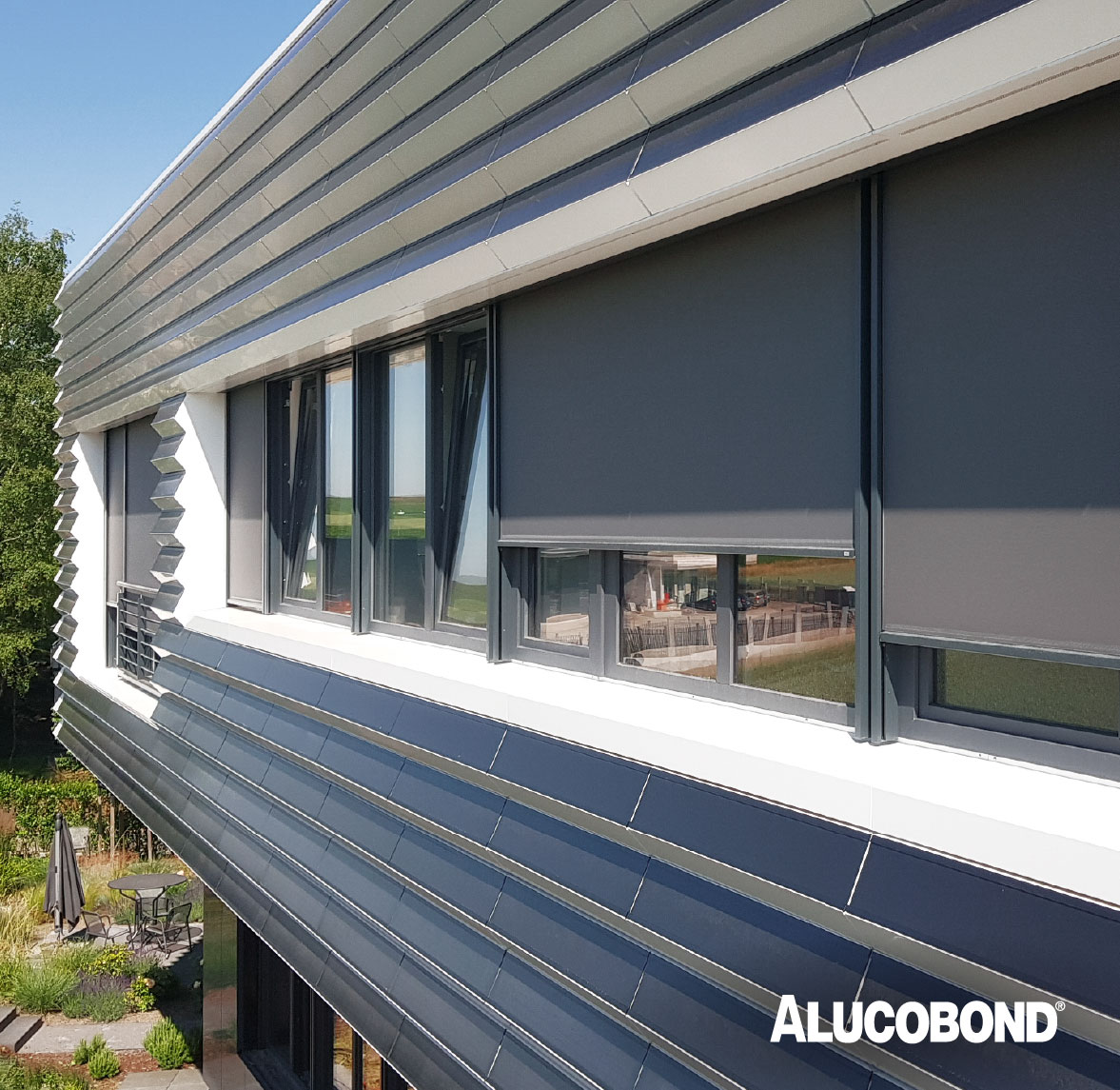
Project name: Solar.shell | Product: ALUCOBOND® PLUS | Building Owner: Aluform Alucobondverarbeitungs-GmbH | Architect: ai:L Architektur-Institut Leipzig | Fabricator/Installer: Aluform Alucobondverarbeitungs-GmbH | Colour: Pure White 10 | Completed year: 2022
Solar-powered architecture no longer demands an aesthetic compromise. With ALUCOBOND®, Solar facade cladding systems can be realised across a wide spectrum of finishes, including:
- Metallic finishes
- Solid colours
- Anodized look finishes
- Stone finishes
- Wood finishes
- Concrete look finishes
- Super-glossy and specialised custom colours
This design flexibility allows the Solar shell to become a strong architectural identity rather than a technical compromise.
Sustainability Beyond Energy Generation
A truly effective Solar-powered building envelope must also use responsible materials. ALUCOBOND® panels are fully recyclable, supporting circular construction practices and reduced embodied carbon, fully aligned with the principles of Solar Shell Architecture.
Where Solar Shell Architecture Is Being Applied
Across the world, Solar shell systems are transforming:
- Corporate headquarters
- Airports and transport hubs
- Hospitality projects
- Educational campuses
- High-rise commercial buildings
- Smart city developments
Each relies on advanced Solar facade cladding systems to meet long-term energy and sustainability goals.
The Future of the Solar Shell
The Solar shell is no longer just the outer skin of a building—it is becoming its most valuable asset. By combining intelligent design with a high-performance Solar facade cladding system, facades can now generate clean energy while enhancing and defining the building itself.
Ready to Transform Your Vision into Reality?
Explore the boundless potential of ALUCOBOND®, ALUCODUAL® and Connect with our team at alucobond.india@3acomposites.com to get started.